At Glen Burnie Dental Group, investing in technology allows us to provide the highest standard of modern dental care for our patients. All our technology must be proven and benefit you in some way, whether it's clearer communication, better understanding of your needs, greater comfort, or improved outcomes.
Please take a few moments to browse through our technology descriptions below. If you have questions or want to schedule an appointment, please call us at (410) 969-9300.
CBCT Cone Beam Technology
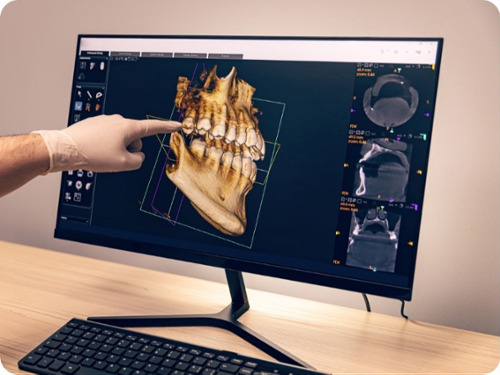
Some situations call for more than a standard x-ray can provide. CBCT (cone beam computed tomography) captures a detailed 3D image of your teeth, jaw, and surrounding bone, giving us a complete picture of your oral anatomy before we begin treatment.
This level of detail is especially valuable for complex treatment planning, such as dental implants, all-on-x, and certain root canal cases. Rather than working from a flat image, we can see the exact shape and location of your bone, nerves, and canals in three dimensions. That means we plan your treatment around your actual anatomy, not an estimate, which supports more predictable outcomes and a higher standard of care.

Rotary Endodontics
Rotary endodontics is a modern approach to root canal treatment that uses small, motor-driven instruments to clean and shape the narrow canals inside a tooth's root. Compared to traditional hand-held tools, rotary instruments work more precisely and efficiently, helping our team complete treatment more thoroughly and in less time.
For you as a patient, this can mean a more comfortable experience and a more consistent result. The smooth, flexible instruments are designed to follow the natural curves of your root canals, reducing the risk of procedural complications. We use rotary instruments for both standard root canal treatment and retreatment cases, where a previously treated tooth needs additional care.

Intraoral Cameras
Have you ever wondered exactly what your dentist sees during an exam? An intraoral camera is a small, wand-like device that captures close-up images inside your mouth and displays them instantly on a screen right next to your chair. It's a simple tool that makes a real difference in how we communicate with you about your oral health.
During your exam, we use the intraoral camera to show you areas of concern, such as small cracks, worn fillings, or early signs of decay, in real time, rather than simply describing them. When you can see exactly what we see, it's easier to understand what is happening and why we may recommend a particular treatment. You are better equipped to ask questions and make confident, informed decisions about your care.
Digital Impressions
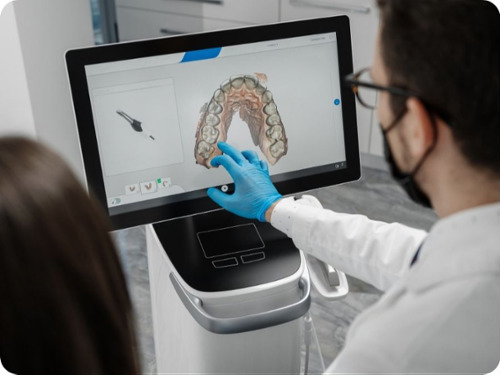
Traditional dental impressions meant biting into a tray of cold, sticky paste and holding still while it set. Digital impressions replace that entire process with a small, handheld scanning wand that captures a precise 3D image of your teeth in just minutes.
The process is straightforward. We gently guide the wand over your teeth, and the scanner instantly creates a detailed, virtual 3D model. That model serves as the foundation for planning restorations, such as crowns, bridges, dentures, and custom whitening trays. Because the images are so accurate, your final restoration is more likely to fit comfortably the first time, reducing the need for adjustments and saving you time in the chair.
Panoramic X-Rays
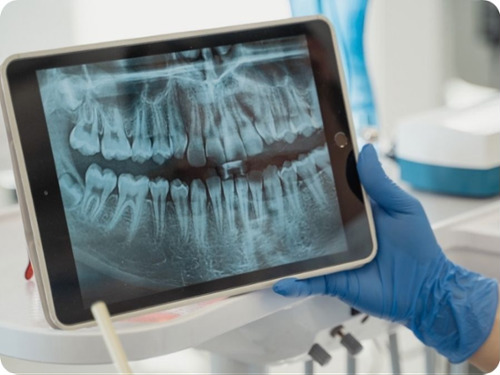
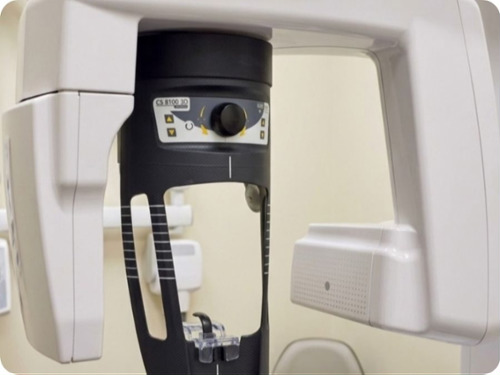
A panoramic x-ray captures your entire mouth in a single image, including your upper and lower jaw, all your teeth, your sinuses, and the surrounding bone structure. Unlike traditional x-rays that use a small sensor placed inside your mouth, a panoramic x-ray is taken while you stand in front of a machine that gently rotates around your head. It's a quick, comfortable process that requires no biting down on anything.
This type of x-ray gives your dentist a broad view of your oral health that standard x-rays simply can't provide on their own. We use panoramic x-rays to evaluate wisdom teeth, support treatment planning for dental implants, dentures, and all-on-x restorations, and to check for issues that may not be visible in routine x-rays. One image tells us a great deal about your overall oral health in a matter of seconds.
Panoramic x-rays are also a great option for patients who have a strong gag reflex or feel uncomfortable with sensors placed inside the mouth. Young children often find them much easier to manage as well.
Digital X-Rays and Sensors
At Glen Burnie Dental Group, we use digital x-rays to get a clearer, faster picture of your oral health. Instead of traditional film that requires time to develop, our digital sensors capture detailed images in seconds and display them on a chairside screen. The result is less time waiting and significantly less radiation exposure compared to older film-based methods.
Digital x-rays help us detect cavities early, monitor your jawbone health, and examine areas below the gumline that aren't visible during a routine exam. Because the images appear right away, your dentist can walk you through what they see in real time, so you leave your appointment with a clear understanding of your oral health and any recommended next steps.